
Your Classroom Has a Story to Tell: Why Documenting Arts Integration Matters
Teachers have a lot on their plates.
Planning. Assessing. Supporting students. And, of course, teaching the required curriculum.
So, when we say, “Document and share about arts integration,” it can be easy to hear: Add one more thing to the list.
But documentation doesn’t have to be complicated or time-consuming. In fact, you may already be doing most of it.
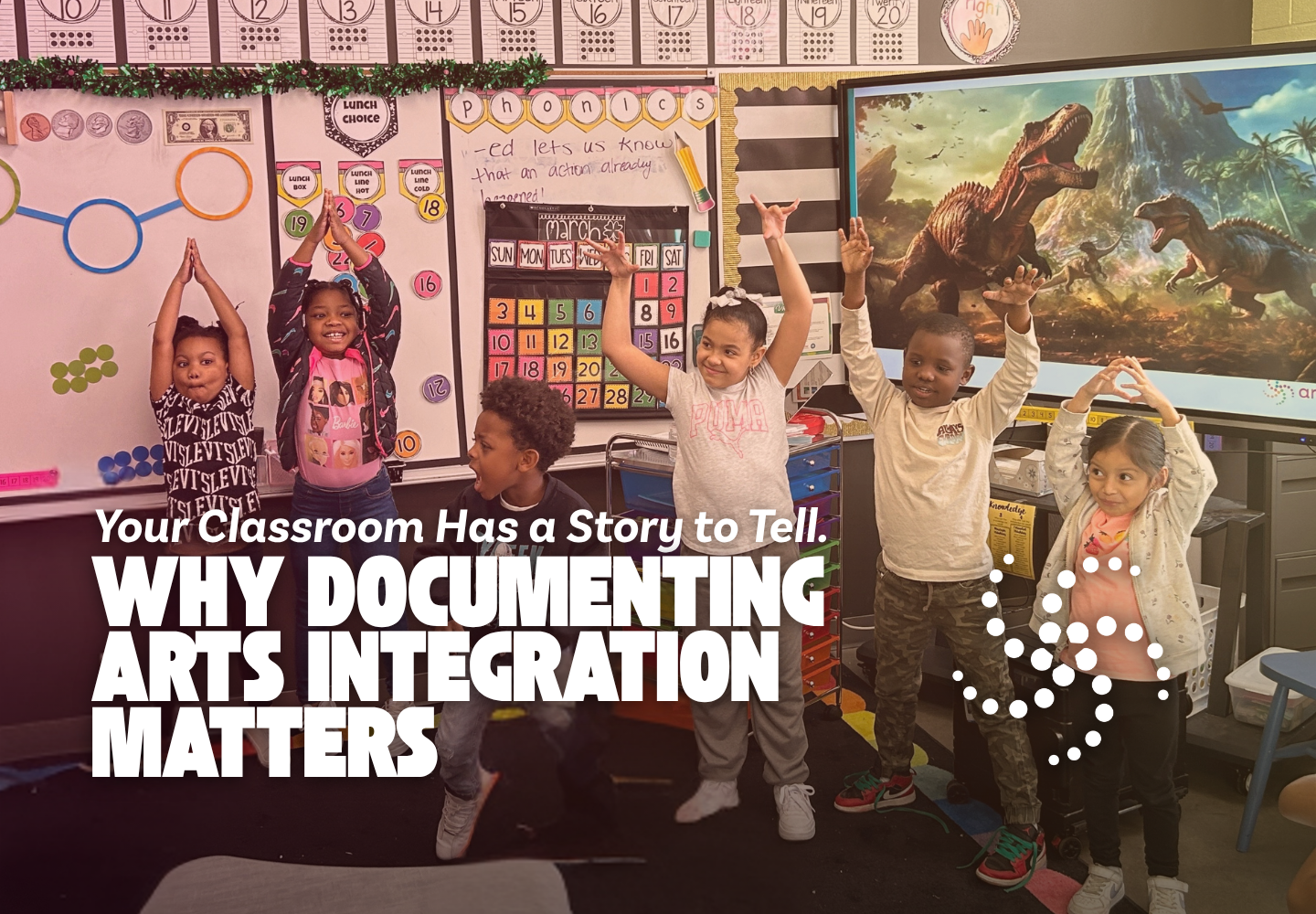
At ArtsNOW, we believe documentation makes student learning visible and teaching concepts tangible. It captures the thinking, creativity, collaboration, and rigor happening in the classroom, and gives others an opportunity to see what arts integration really looks like.
It can also build classroom pride, strengthen connections with families and communities, support advocacy, and create a record of your work that can be useful down the road.
The key is finding simple but effective ways to tell your classroom story. Try these four tips to get started:
1. Choose a place that works for you, and your audience.
You don’t have to become a social media expert to tell your classroom’s story.
Think about where the people you want to reach are already getting information. That might be social media, but it could also be an internal school platform, newsletter, school website, or even a hallway display!
You know your families and community best. Meet them where they are.
At one partner school, J.C. Lynch Elementary, teachers have an “ArtsNOW Corner” in their weekly parent communication, highlighting an arts integration strategy, lesson, or vocabulary word from their classroom. It’s simple, consistent, and gives families context for the learning happening at school.
Another partner school, Gateway Elementary, recently published a personalized message from their principal about an upcoming ArtsNOW visit. A few sentences in a newsletter from a school leader serves multiple purposes: providing information while also garnering excitement and buy-in from the entire school community.
2. Capture the process, with context.
Take a photo or short video while students are working. Jot down something a student said that demonstrated a new understanding or simply reflected joy in learning!
The process is often more telling than the final product.
A finished sculpture shows what a student created, but it doesn’t show what they learned along the way. Remember to add a little context!
Try answering three simple questions:
What are students learning? How are they using the arts? Why does it matter?
Something like, “Third grade students are using dramatic expression and voice texture to explore author’s purpose, allowing them to step inside the mind of the author and deepen their understanding of a story theme.”
A short explanation gives your audience a window into the learning behind the activity.
3. Build a story bank.
That photo, reflection, or classroom update takes only a few minutes to create, but its value can last much longer.
We’ve heard from educators who were able to pull examples of their arts integration work into successful grant applications because they were already in the habit of documenting and sharing. Over time, these pieces create a record of learning that can help teachers advocate with administrators, communicate with families, demonstrate impact, and support future opportunities.
4. Use the resources and partnerships you already have.
There’s no need to reinvent the wheel.
If your school is working with ArtsNOW, connect with us and utilize the stories we’re already sharing! That might look like social media posts about school visits, or a spotlight on your school in our monthly newsletter that you share with your community.
And don’t be afraid to collaborate and connect with other educators in your building! Are your Kindergarteners utilizing their understanding of 2D geometric shapes during art class? Snag some photos from the art teacher and work together to tell the story of arts integration.
So don’t think of documentation as one more task.
Think of it as capturing the work you’re already doing.
Your students are learning, creating, questioning, collaborating, and making connections every day. When we tell those stories together, we strengthen the case for arts integration in classrooms and communities everywhere.
Get connected with ArtsNOW! Follow us on Facebook, Instagram, LinkedIn, and X, or subscribe to our monthly newsletter: https://artsnowlearning.org/communication-preferences/