
A Chair For My Mother 4 (Dance)

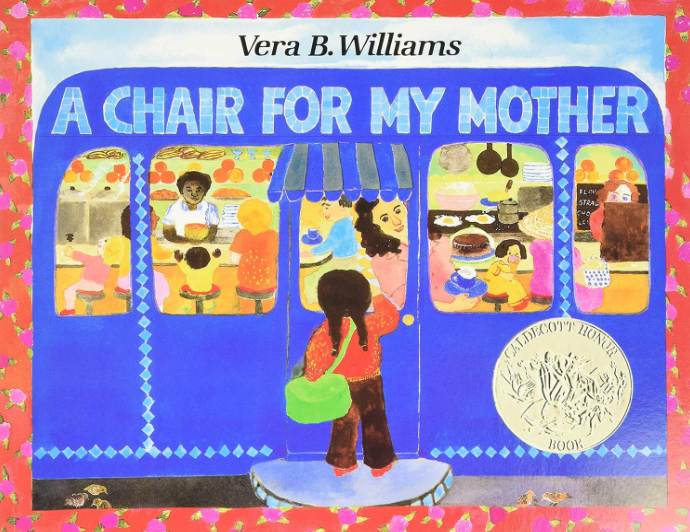
A colorful banner featuring the book "A Chair for My Mother" on the left, "Creativity Task Cards" in white script at the center, and a large white number 4 in a yellow circle on the right.

Art Form: Dance


Supplies Needed

-A Chair for My Mother book
-Paper
-Pencil or pen

Vocabulary

Sequence - a series of movements performed in a specific order

Problem/Solution - the challenge a character faces and how they solve it

Level - one of the aspects of movement (there are three basic levels in dance: high, middle, and low)

Locomotor Movement - a movement that travels through space (walking, skipping)

Non-locomotor Movement - a movement that does not travel through space (bending, swinging arms)

Summarize - To briefly tell the most important parts of a story in your own words.

Instructions

1. Read A Chair for My Mother. As you read, think about the story’s structure: What happens at the beginning? What happens in the middle? How does the story end?

2. Write three short sentences, one for each part of the story, to summarize:
a.What happened at the beginning?
b.What happened in the middle?
c.What happened at the end?

3. Then, create a three-step movement sequence to match each part of your summary. For each movement, choose a level that matches the feeling or event.

4. Be sure you have locomotor and non-locomotor movements in your sequence. Practice your sequence in order to retell the story with both your words and your body.

Extensions

Add an opening and closing pose to your movement sequence to show how one character felt at the start and how they felt at the end.

Reflect: How did the movement change from beginning to end, just like the character?
About

The REimagining and Accelerating Literacy through Arts Integration (REALAI) grant supports the literacy achievement of 3,200 students and 170 teachers, media specialists, and literacy coaches across six schools in Georgia and South Carolina.

In addition to professional learning for educators, this project contributes significantly to school library collections through the purchase of developmentally appropriate and culturally relevant books.

This grant also includes parent events to provide families with access to books and other content about how to support their child’s reading development.

A Chair For My Mother 4 (Theatre)

A colorful banner featuring the book "A Chair for My Mother" on the left, "Creativity Task Cards" in white script at the center, and a large white number 4 in a yellow circle on the right.

Art Form: Theatre


Supplies Needed

-A Chair for My Mother book
-Scissors
-Paper and pencil
-A prop to use as a microphone

Vocabulary

Improvisation - A moment in a play that is not
rehearsed or “scripted” , or acting without a script. For example: if an actor forgets a line, he/ she may improvise the line in the scene.

Detail - an individual feature, fact, or item; a small part of a larger whole

Inference - an educated guess based on given information

Flashback - a scene in a story set in an earlier time than the main part of the story

Character - a person in a story or play, or an animal or object that has human qualities

Instructions

1. Read the story. The most dramatic part of A Chair For My Mother is the fire, which is related in a flashback. Reread the pages that comprise the flashback from “My mother and I were coming home . . . “ to “We went to stay with my mother’s sister Aunt Ida and Uncle Sandy”.

2. Look for the details that are stated in the text (for example, “everything was turned to charcoal and ashes”) and think about details that are not stated in the text but that you have to guess or infer (for example, where Grandma was when the fire started and how she made it out on her own or was rescued).

3. With a family member or friend, improvise a news report. One person is the reporter and the other is a character from the story. The reporter should interview the character to hear about what happened. The interviewer should be very interested and ask specific questions. The replies should be spoken through the emotion of the character and should include details.

4. Because you are improvising, you can add details that are not stated or shown in the book, but that you guess or infer.

Extensions

Draw a picture to go with your interview that shows an aspect of the story not shown in the book.

Conduct a follow-up interview where the reporter comes back months later to interview the same character and hear how things have changed or developed since the fire.

About

The REimagining and Accelerating Literacy through Arts Integration (REALAI) grant supports the literacy achievement of 3,200 students and 170 teachers, media specialists, and literacy coaches across six schools in Georgia and South Carolina.

In addition to professional learning for educators, this project contributes significantly to school library collections through the purchase of developmentally appropriate and culturally relevant books.

This grant also includes parent events to provide families with access to books and other content about how to support their child’s reading development.

A Chair For My Mother 4 (Visual Arts)

A colorful banner featuring the book "A Chair for My Mother" on the left, "Creativity Task Cards" in white script at the center, and a large white number 4 in a yellow circle on the right.

Art Form: Visual Arts


Supplies Needed

-A Chair for My Mother book
-Scissors
-Glue or Tape
-Recycled items (cardboard, bottle caps, paper tubes, string, fabric scraps, etc.)
-Crayons, markers
-Paint (optional)

Vocabulary

Sculpture - a three-dimensional work of art that can be made from a variety of materials

Recycle - to use something old in a new way

Structure - how something is built or held together

Stability - how strong and balanced something is

Design - a plan or idea for how something should look or work

Instructions

1. Read the book, A Chair for My Mother. This about the characters in the story. How did they work together. What was their goal? Why was it important to get a new chair for her mother?

2. Think about what kind of chair would bring someone you love comfort and happiness? Design the chair and make a sketch.

3. Gather recycled or household materials that you might find around your house.

4. Use tape or glue to build a mini 3D chair (it can be realistic, imaginative, or even magical!).

5. Add details using color, texture, and symbols that reflect the person your chair was designed for.

Extensions

Add a tiny sculpture of the person the chair is for, sitting or standing next to it.

Write a short story or poem about the chair and who it's for.

Turn your chair into part of a mini room or diorama that tells more of the story.

About

The REimagining and Accelerating Literacy through Arts Integration (REALAI) grant supports the literacy achievement of 3,200 students and 170 teachers, media specialists, and literacy coaches across six schools in Georgia and South Carolina.

In addition to professional learning for educators, this project contributes significantly to school library collections through the purchase of developmentally appropriate and culturally relevant books.

This grant also includes parent events to provide families with access to books and other content about how to support their child’s reading development.

All Are Welcome 3 (Music)

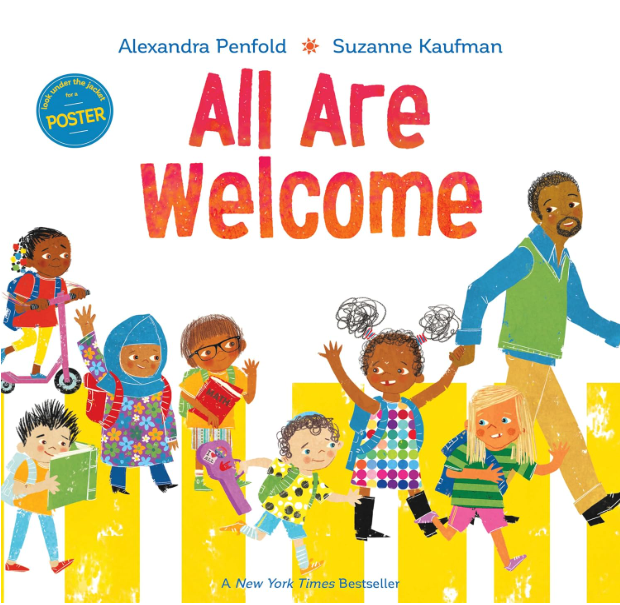
A banner with the book cover "All Are Welcome," the words "Creativity Task Cards," and a large number 3 on a colorful teal and yellow background.

Art Form: Music


Supplies Needed

-All Are Welcome book

Vocabulary

Ostinato - a series of movements performed in
a specific order

Rhythm - an expressive movement of the body or limbs

Steady Beat - The consistent pulse or "heartbeat" of music

Rest - silence

Form - the organization of a piece (how the
music is put together)

Phrase - musical sentence

Character - a person in a story or play, or
an animal or object that has human qualities

Central Message - the big idea or lesson of the
story

Instructions

1. Read the book. Discuss the events of the book. Who are the characters? What is the setting? What is the main idea or central message of the book?

2. Notice how the words are organized: one repeated phrase (“all are welcome here”) preceded by three phrases with rhyming words at the end.

3. Create a four-beat pattern using your body (for example, pat-clap-snap-snap).
Repeat your pattern several times. This is called a four-beat ostinato.
Remember to keep the steady beat! Keep your ostinato simple!

4. Say “all are welcome here” in a rhythm while performing your four-beat ostinato. You will say more than one word or syllable on a beat. Some beats may not have any words. Find the rhythm you like best!

5. Read the remaining phrases rhythmically while performing the ostinato. Read each phrase in a rhythm over four beats—remember you may have multiple words and/or syllables on each beat.

6. Notice how the book is organized: each section has three phrases (in regular font) followed by one phrase repeated throughout the book (in bold font). These same and different phrases create a musical form! Read the book rhythmically while performing the ostinato.

Extensions

Read the book at different tempos (faster or slower).

Experiment with different ostinatos to perform while reading the book.

About

The REimagining and Accelerating Literacy through Arts Integration (REALAI) grant supports the literacy achievement of 3,200 students and 170 teachers, media specialists, and literacy coaches across six schools in Georgia and South Carolina.

In addition to professional learning for educators, this project contributes significantly to school library collections through the purchase of developmentally appropriate and culturally relevant books.

This grant also includes parent events to provide families with access to books and other content about how to support their child’s reading development.

All Are Welcome 3 (Dance)

A banner with the book cover "All Are Welcome," the words "Creativity Task Cards," and a large number 3 on a colorful teal and yellow background.

Art Form: Dance


Supplies Needed

-All Are Welcome book

Vocabulary

Sequence - a series of movements performed in
a specific order

Gesture - an expressive movement of the body or limbs

Rhyme - words that end with the same sound (Ex: play/day or here/near)

Character - a person in a story or play, or
an animal or object that has human qualities

Central Message - the big idea or lesson of the
story

Instructions

1. Read the book All Are Welcome. As you read, notice the repeating line: “All are welcome here!” Think about what this line means. Is that the central message of the book? Why or why not? How can you show someone they are welcome through words and movement?

2. Now it’s your turn! Create your own one-line welcoming message, and try to make it rhyme! (Ex: “Come and play, stay all day!”)

3. Once you’ve created your welcoming line, create one to three
movements to go with it. Think about gestures or movements that show kindness, safety, or belonging.

4. Practice saying your line out loud as you perform your movement sequence.

5. Perform your dance sequence for a family member. Ask the family member to create their own dance sequence.

Extensions

Add music and explore how your movement changes with different tempos or moods of the chosen music.

Create a dance sequence that demonstrates what happened in the beginning, middle, and end of the story.

About

The REimagining and Accelerating Literacy through Arts Integration (REALAI) grant supports the literacy achievement of 3,200 students and 170 teachers, media specialists, and literacy coaches across six schools in Georgia and South Carolina.

In addition to professional learning for educators, this project contributes significantly to school library collections through the purchase of developmentally appropriate and culturally relevant books.

This grant also includes parent events to provide families with access to books and other content about how to support their child’s reading development.
