
Math Curse 5 (Music)

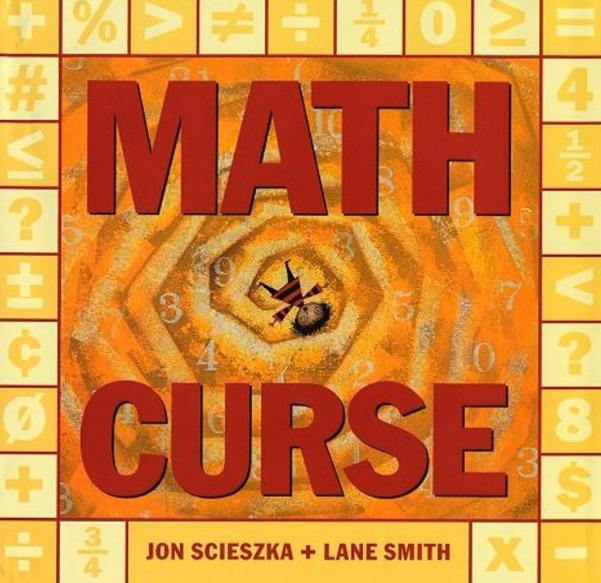
A banner with “Math Curse” book cover on the left, “Creativity Task Cards” in white script on a pink circle in the center, and a large white number 5 on a yellow circle to the right.

Art Form: Music


Supplies Needed

-Math Curse book
-Items for sound making (pencil, pot, spoon, etc.)

Vocabulary

Dynamics - loud and soft sounds; volume

Steady Beat - the consistent pulse or "heartbeat" of music

Tempo - the speed of the beat

Found Sound - materials in the environment that make sound, including the body

Timbre - the distinctive quality of sound

Character - a person in a story or play, or an animal or object that has human qualities

Central message - the main point or lesson of the story

Key Details - specific pieces of information that support or add meaning to the story

Instructions

1. Read the book. Notice the many problems the character encounters during his
day! Who is the main character? What is the central message of the story? Think about the events and issues the character experienced. What was the sequence of events. What are the details the author adds to make the book interesting?

2. Using found sound, experiment with different ways of making sound. Notice the distinct sound (timbre) each makes. Some materials may make several different sounds. When sounds are played together it creates texture. Notice the dynamics of each sound. Practice performing the steady beat using several found sounds.

3. Create music to illustrate the events or details in the book. For example, how could the plaid shirt, the blue shirt, and the striped shirt be represented with found sounds? How could you change the found sound to demonstrate the ugly, plaid shirt? What it sound differently? Why did you make those choices? Next, try using your favorite sound at different volumes to represent each type of shirt and show the difference with dynamic changes.

4. Find other events or details in the story and add sounds as you reread the pages. What sounds would the character make when he feels trapped in the math curse? What sounds could you create to demonstrate how the character feels when the curse is broken? How do the sounds compare?

Extensions

Create rhythms using the sounds you created. Combine the sounds to add texture.

What would happen if the math curse wasn't broken? Write a new musical ending
to the story.
About

The REimagining and Accelerating Literacy through Arts Integration (REALAI) grant supports the literacy achievement of 3,200 students and 170 teachers, media specialists, and literacy coaches across six schools in Georgia and South Carolina.

In addition to professional learning for educators, this project contributes significantly to school library collections through the purchase of developmentally appropriate and culturally relevant books.

This grant also includes parent events to provide families with access to books and other content about how to support their child’s reading development.

Math Curse 5 (Dance)

A banner with “Math Curse” book cover on the left, “Creativity Task Cards” in white script on a pink circle in the center, and a large white number 5 on a yellow circle to the right.

Art Form: Dance


Supplies Needed

-Math Curse book
-Music with a steady and clear beat (optional)
-Pencil and paper

Vocabulary

8-count  - The way dancers count music in sets of eight beats (1-2-3-4-5-6-7-8)

Locomotor movement - a movement that travels through space (walking, skipping)

Non-locomotor movement - a movement that does not travel through space (twisting, bending)

Level - one of the aspects of movement (there are three basic levels in dance: high, middle, and low)

Tempo - refers to the pace or speed of movement

Irony - a situation which brings the exact opposite of what one would expect, often resulting in humor or amusement

Character - a person in a story or play, or an animal or object that has human qualities

Central message - the main point or lesson of the story

Instructions

1. Read Math Curse. Notice how the main character sees everything, even the day, as a problem to solve. How does the character react to the problems faced during the day? What happens in the beginning of the story? How did the character change during the story? How does the story end? What is the central message of the story?

2. Dancers count in eights (1, 2, 3, 4, 5, 6, 7, 8). Today, you will create a dance with four different movements. The dance will be 16 counts long expressing the character's feelings from the beginning of the story, through the middle, until the end.

3. What were the feelings of the character at the beginning of the story? Create a movement to demonstrate those feelings. During the story, did his emotions change? Create two new movements to demonstrate the change of feelings in the middle of the story. How did the character feel at the end of the story? Create a fourth movement to show how the character felt at the end of the story.

4. Your dance should include at least:
a. Three different levels (high, medium, low)
b. One locomotor movement
c. One non-locomotor movement
d. One fast movement and one slow movement

5. Plan and build your sequence carefully so you can fit all of these "dance variables" into your 16 counts. Practice counting out loud in eights as you perform your dance.

Extensions

Challenge yourself to create a 32-count sequence in a new order. Can you keep all the same movement elements (levels, tempo, locomotor/non-locomotor), but change when they
happen in the sequence? You could add more movements to demonstrate what happened in the story

About

The REimagining and Accelerating Literacy through Arts Integration (REALAI) grant supports the literacy achievement of 3,200 students and 170 teachers, media specialists, and literacy coaches across six schools in Georgia and South Carolina.

In addition to professional learning for educators, this project contributes significantly to school library collections through the purchase of developmentally appropriate and culturally relevant books.

This grant also includes parent events to provide families with access to books and other content about how to support their child’s reading development.

Math Curse 5 (Theatre)

A banner with “Math Curse” book cover on the left, “Creativity Task Cards” in white script on a pink circle in the center, and a large white number 5 on a yellow circle to the right.

Art Form: Theatre


Supplies Needed

-Math Curse book
-Paper and pencil

Vocabulary

Humor - the quality of being amusing or comical, inspiring delight and laughter, usually resulting from a surprise, a shift of meaning or the flipping of expectations

Irony - a situation which brings the exact opposite of what one would expect, often resulting in humor or amusement

Non-sequitur - (from the Latin for "not following") - an idea or comment that seems to have no reasonable connection to what came before it

Word Play - the clever and witty use of words, often involving double meanings, puns, or other devices that go beyond literal meanings to create humor

Instructions

1. Read the book. Who is the main character? What is happening when he begins to see everything as a math problem? Find several of your favorite pages of Math Curse.

2. Look for the ways Jon Scieszka (pronounced "SHESS-kah") and Lane Smith use to create humor. Note that each change in the setting usually starts out as a straightforward problem. Then the character sees other problems. Look for surprises, shifts in meaning, irony, non-sequiturs, and word play. How does the character react to each situation? What emotions is the character feeling when faced with a new problem or question?

3. Actors use their bodies, face, and voice to create characters. What voice would the character have? Would it have a high pitch or low pitch? Would it be fast or slow? How would it change as the character encounters the events of the day?

4. Now create facial expressions to go along with the events of the story. What would your face look like if you were surprised, angry, frustrated or happy? Try your different facial expressions to reflect the character in the book.

5. Reread some of the story, using the voice and facial expressions your used to create the character in the book. Reread the book out loud with rising emotion. Like the character in the book, start simple and calm, then become more frustrated, hysterical, or silly as you go.

Extensions

Draw a picture of a problem and solution in your life. Try to reflect the visual style
of the book in your illustration.

As you encounter humor, in talking with friends or in watching TV or films, look for
the humor techniques that the authors demonstrate in Math Curse.

About

The REimagining and Accelerating Literacy through Arts Integration (REALAI) grant supports the literacy achievement of 3,200 students and 170 teachers, media specialists, and literacy coaches across six schools in Georgia and South Carolina.

In addition to professional learning for educators, this project contributes significantly to school library collections through the purchase of developmentally appropriate and culturally relevant books.

This grant also includes parent events to provide families with access to books and other content about how to support their child’s reading development.

Math Curse 5 (Visual Arts)

A banner with “Math Curse” book cover on the left, “Creativity Task Cards” in white script on a pink circle in the center, and a large white number 5 on a yellow circle to the right.

Art Form: Visual Arts


Supplies Needed

-Math Curse book
-Paper
-Pencil and eraser
-Markers or colored pencils (optional)

Vocabulary

Comic - a story told through pictures and speech bubbles in a horizontal line, template below

Panel - to use something old in a new way

Exaggeration - making something seem bigger or funnier than it is

Expression - a way to show feelings through faces and body language

Visual Storytelling - using pictures to tell a story or explain an idea

Instructions

1. Read Math Curse. Think about the character and the problems that occurred during the day. What humorous moments occurred in the story? How was the character feeling during the story? Did those feelings change? Why or why not? Was the character able to overcome the "math curse"?

2. Think of a new ending to the story. Did the character encounter other issues during the day? Did the character encounter any other people in the new ending to help solve the problems?

3. Sketch a short comic (3-6 panels) that retells the story or create a comic strip with a new ending. Each panel could be a different event from the story. Use speech bubbles to share the characters toughs and questions.

4. Add color, details, and expressions to bring it to life. The author uses a lot of humor and irony in the book. Can you include more panels to add humorous moments?

Extensions

Trade comics with a friend, or family member, and discuss your alternate endings

Turn your comic into a short animated video using a stop-motion or drawing app such as Ninja brush or autodraw.

About

The REimagining and Accelerating Literacy through Arts Integration (REALAI) grant supports the literacy achievement of 3,200 students and 170 teachers, media specialists, and literacy coaches across six schools in Georgia and South Carolina.

In addition to professional learning for educators, this project contributes significantly to school library collections through the purchase of developmentally appropriate and culturally relevant books.

This grant also includes parent events to provide families with access to books and other content about how to support their child’s reading development.

A Chair For My Mother 4 (Music)

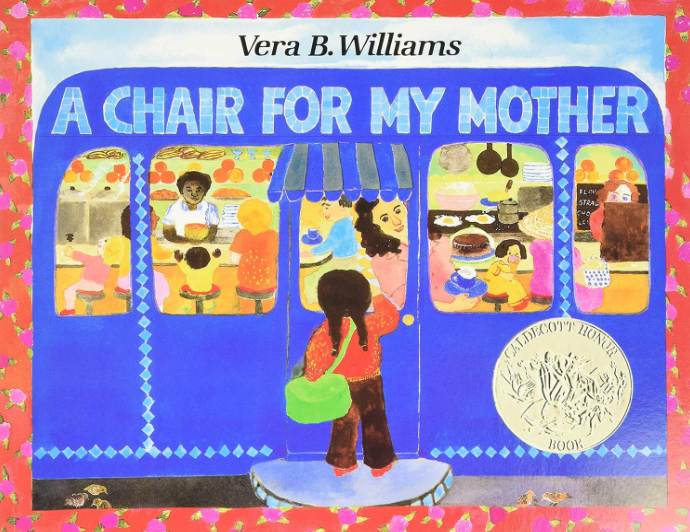
A colorful banner featuring the book "A Chair for My Mother" on the left, "Creativity Task Cards" in white script at the center, and a large white number 4 in a yellow circle on the right.

Art Form: Music


Supplies Needed

-A Chair for My Mother book
-Paper
-Glass jar
-Coins (paper clips, pebbles, or other small objects will work, too)
-Writing Materials

Vocabulary

Dynamics - loud and soft sounds; volume

Rhythm - long and short sounds and silences

Beat - the consistent pulse or “heartbeat” of music

Tempo - the speed of the beat

Introduction - a short section at the beginning that sets the mood and generates interest

Coda - a short section at the end after the main part is finished

Character - a person in a story or play, or an animal or object that has human qualities

Central message - the big idea or lesson of the story

Instructions

1. Read the book. Discuss the events in the book. Who are the characters? What is the setting? What is the main idea or central message of the book?

2. Write a short sentence about what we can learn from the story.

3. Pat a steady beat. Practice saying your sentence in a rhythm while patting the beat. You may say more than one word or syllable on a beat—this creates an interesting rhythm.

4. Drop coins in a jar one by one. Describe the sound. How do the dynamics change depending on where you drop the coins from (close to the rim, higher in the air)? How does the sound change as the jar fills with coins (higher, lower, same)?

5. Read the story, putting coins in the jar each time the characters do. Decide:
-Will the dropping coins have a steady beat? Will they have a rhythm?
-Will they be dropped randomly (no steady beat)?
-How many coins will go in the jar each time?
-Will the dynamics be loud or quiet or in between?
-Will the coins be dropped individually or in groups?

6. Your jar needs to be filled by the end of the story! At the end of the story, say your rhythmic sentence. Decide how many times you’ll say your sentence and what the tempo and dynamics will be.

Extensions

Say the book title rhythmically over four beats. Read the title rhythmically as an
introduction to the book; read the sentence you wrote at the end as a coda.

Consider others ways to create an introduction and coda.

About

The REimagining and Accelerating Literacy through Arts Integration (REALAI) grant supports the literacy achievement of 3,200 students and 170 teachers, media specialists, and literacy coaches across six schools in Georgia and South Carolina.

In addition to professional learning for educators, this project contributes significantly to school library collections through the purchase of developmentally appropriate and culturally relevant books.

This grant also includes parent events to provide families with access to books and other content about how to support their child’s reading development.
