

Art Form: Theatre
Supplies Needed
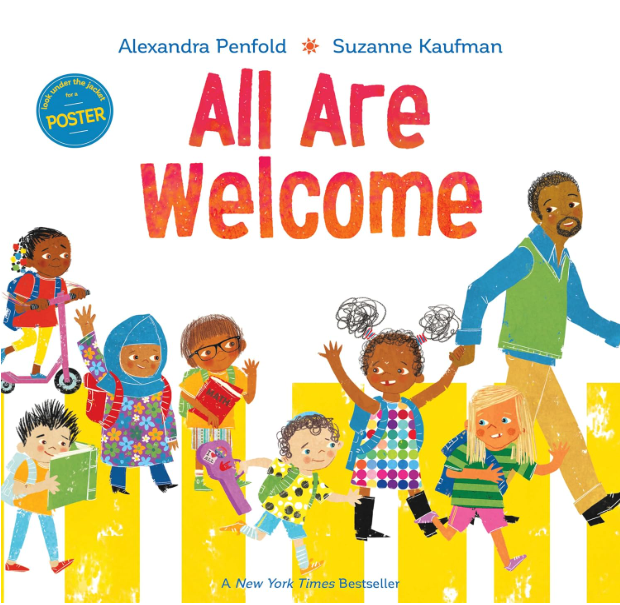
-All Are Welcome book
-Paper and pencil
Vocabulary
Character - a person in a story or play, or
an animal or object that has human qualities
Monologue - a long speech by a single character
First-Person - a narrative ‘voice’ in which
the person or character telling the story is talking about their own experience
Dialogue - a conversation between two or more persons
Instructions
1. Choose one of the students that you see on the cover or the first page of the story. You can choose one that you identify with, or one that is different from you. Imagine a name for that character.
2. Read the story. As you read through the book track your character. Most of the students appear on most of the pages.
3. Make notes about at least five activities, emotions, or situations that your character is shown doing, expressing, or being involved in (for example, “sharing a pretzel with a friend” or “swinging on a swing”).
4. Write a short monologue for your character about their day. Use first-person writing – don’t write about the character, but write as the character. For example, the character could say, “I was so excited to show everyone what we learned about bugs!”. Describe what the character has done and also how they feel about it.
5. Practice and then perform your monologue for a friend or family member. You could perform without telling them which character you chose, and then see if they can find the character in the book based on your monologue.
Extensions
Choose one of the activities from your monologue where your character is talking to another child or adult. Write a short dialogue of what they might say each other.
Talk with a family member or friend about what makes you feel welcome in your school or community. How could you help others feel welcome?
About
The REimagining and Accelerating Literacy through Arts Integration (REALAI) grant supports the literacy achievement of 3,200 students and 170 teachers, media specialists, and literacy coaches across six schools in Georgia and South Carolina.
In addition to professional learning for educators, this project contributes significantly to school library collections through the purchase of developmentally appropriate and culturally relevant books.
This grant also includes parent events to provide families with access to books and other content about how to support their child’s reading development.